

Call us now
07971459627

 Send Inquiry
Allen-Bradley 1766-L32AWA
Price 35000.0 INR/ Unit
MOQ : 1 Unit
Allen-Bradley 1766-L32AWA Specification
- Cover Material
- Plastic
- Thickness
- Standard
- Rated Insulation Voltage
- 250V AC
- Operating Voltage
- 110/120/220/240V AC
- Rated Current
- 8A (relay outputs)
- Components
- CPU, Digital Inputs/Outputs, Communication Ports
- Cabinet Material
- Plastic
- Base Material
- Plastic
- Control System
- Programmable Logic Controller (PLC)
- Current Rating
- 8A
- Way
- 32 Points
- Panel Type
- DIN Rail/Panel Mount
- Protection Class
- Class I
- Rated Operation Voltage
- 110-240V AC
- Features
- Expandable I/O, Built-in Real Time Clock, Data Logging, Ethernet Support, High-Speed Counter
- Connectivity Type
- Ethernet, RS-232/485, Expansion Port
- Cooling System
- Natural Air Cooling
- Protection Level
- IP20
- Product Type
- MicroLogix 1400 PLC
- Material
- Plastic/Metal
- Surface Finish
- Matte
- Standard
- IEC 61131-2
- Surface Color
- Grey
- Rated Voltage
- 110/120/220/240V AC
- Frequency (MHz)
- 50/60 Hz
- Maximum Output Current
- 8A per output (Relay)
- Dimension (L*W*H)
- 90 x 260 x 87 mm
- Application
- Automation Control Systems
- IP Rating
- IP20
- Display Type
- LCD Display
- Power Supply
- Integrated
- Response Time
- <2 ms digital input
- Clock
- Integrated Real Time Clock
- Number of Digital Inputs
- 20
- Expansion Capability
- Supports up to 7 1762 Expansion Modules
- Input Type
- Digital AC
- Model Number
- 1766-L32AWA
- Mounting
- Panel or DIN Rail
- Software Support
- RSLogix 500, Connected Components Workbench
- Communication Protocols
- Ethernet/IP, Modbus, DF1, DH-485
- Number of Digital Outputs
- 12 (Relay)
- Operating Temperature Range
- 0C to +55C
- Memory
- 20 KB User Program
- Series
- MicroLogix 1400
Allen-Bradley 1766-L32AWA Trade Information
- Minimum Order Quantity
- 1 Unit
- Delivery Time
- 2 Week
About Allen-Bradley 1766-L32AWA
Key Technical Specifications
- I/O Count: 32 points total, consisting of 20 digital 120V AC inputs and 12 relay outputs.
- Power Supply: 100/240V AC operating voltage (4763 Hz).
- Memory: 20 KB user program and data memory.
- Communication Ports:
- One isolated RS-232/RS-485 combo port.
- One non-isolated RS-232 port.
- One 10/100 Mbps Ethernet/IP port with email and web server capabilities.
- Expansion: Supports up to seven 1762 I/O expansion modules.
- Mounting: Compatible with DIN rail or panel mounting.
- Physical Dimensions: Approximately 90 x 180 x 87 mm (3.5 x 7.087 x 3.43 in).
Versatile Automation Control
The Allen-Bradley 1766-L32AWA delivers dependable automation solutions with 32-point I/O capability, a 20 KB user program memory, and expandable architecture. Its compatibility with Ethernet/IP, Modbus, DF1, and DH-485 ensures seamless integration into a wide range of industrial applications and control systems.
Enhanced Connectivity and Expansion
With support for multiple protocols and up to 7 1762 expansion modules, this PLC accommodates evolving system requirements. The integrated Ethernet, RS-232/485, and expansion ports allow for easy communication, data sharing, and network scalability in demanding environments.
Reliable Operation in Industrial Settings
Designed for harsh conditions, the 1766-L32AWA operates within a temperature range of 0C to +55C and features a robust, IP20 plastic enclosure. Its compact form, flexible mounting options, and natural air cooling make it ideal for installation into automation panels and control cabinets.
FAQ's of Allen-Bradley 1766-L32AWA:
Q: How does the Allen-Bradley 1766-L32AWA support communication within automation networks?
A: The Allen-Bradley 1766-L32AWA PLC includes built-in ports for Ethernet/IP, Modbus, DF1, and DH-485, allowing easy integration and data exchange with various control devices and systems. These protocols enhance network flexibility, making it suitable for diverse industrial automation applications.Q: What is the process to expand the I/O capability of the 1766-L32AWA controller?
A: Expanding the I/O of the 1766-L32AWA is straightforward: you can connect up to seven compatible 1762 expansion modules to the main unit. This modular expansion allows tailored configurations for your specific control needs without replacing the core controller.Q: When should I use the integrated real-time clock (RTC) in my application?
A: The integrated real-time clock is ideal for applications that require time-based operations such as scheduled task execution, timestamped data logging, and event recording. It helps automate processes and maintain precise timing in your control system.Q: Where can the 1766-L32AWA be mounted within an industrial setting?
A: This PLC can be mounted either on DIN rails or directly onto a panel, offering flexibility for a broad array of cabinet designs and installation requirements in industrial environments.Q: What software is compatible with programming the 1766-L32AWA PLC?
A: The 1766-L32AWA can be programmed and configured using RSLogix 500 or Connected Components Workbench software, both of which provide intuitive interfaces and support for advanced programming features.Q: How does the fast input response time benefit industrial processes?
A: With a digital input response time of less than 2 ms, the 1766-L32AWA ensures that input signals are quickly detected and processed. This rapid response enhances real-time control, which is vital for applications demanding high-speed operations and accurate monitoring.Q: What are the primary advantages of using the 1766-L32AWA in automation control systems?
A: Users benefit from its expandable I/O, high-speed counter, integrated data logging, and multi-protocol support. These features provide reliable performance, improve system scalability, and facilitate seamless integration into complex industrial automation environments.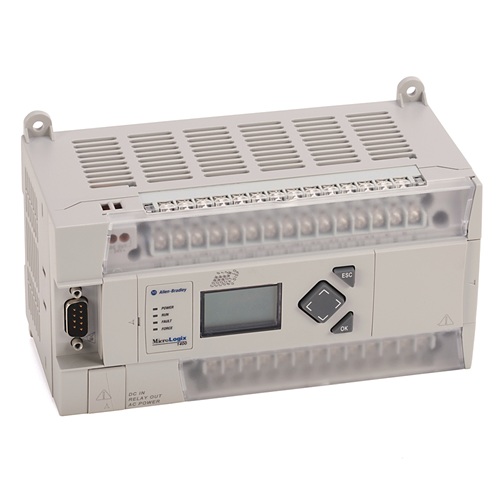
Tell us about your requirement

Price:
Quantity
Select Unit
- 50
- 100
- 200
- 250
- 500
- 1000+
Additional detail
Mobile number
Email

More Products in PLC Category
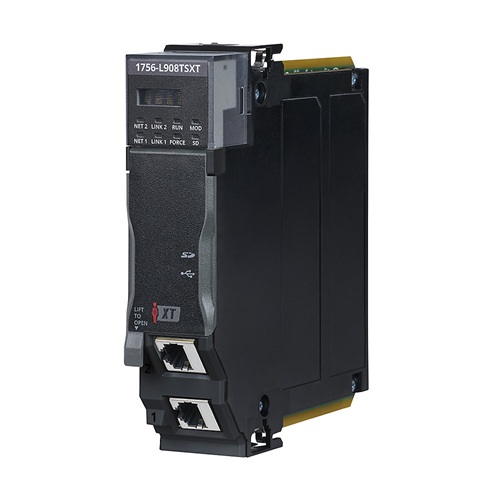
Allen-Bradley 1756-L902TSXT
Price 95000.0 INR / Unit
Minimum Order Quantity : 1 Unit
Surface Color : Other, Black / Grey
Maximum Output Current : Not Applicable (Controller with module communication)
Base Material : Other, Specialized FPGA and processor materials
Cabinet Material : Industrial plastic/alloy for XT environments
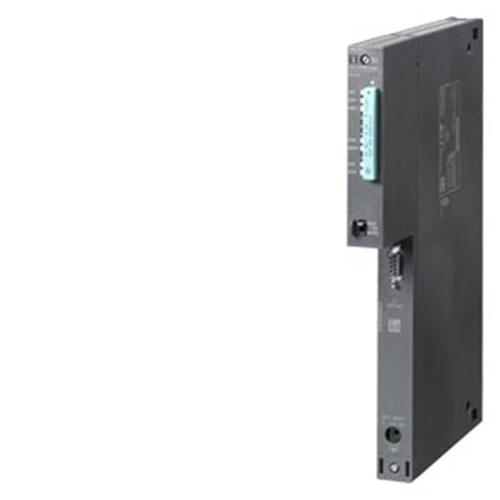
Siemens CPU412-1 6ES7412-1XJ07-0AB0
Price 450000.0 INR / Unit
Minimum Order Quantity : 1 Unit
Surface Color : Other, Gray
Maximum Output Current : 1.0 A
Base Material : Other, Plastic
Cabinet Material : Plastic Frame, Metal Contacts
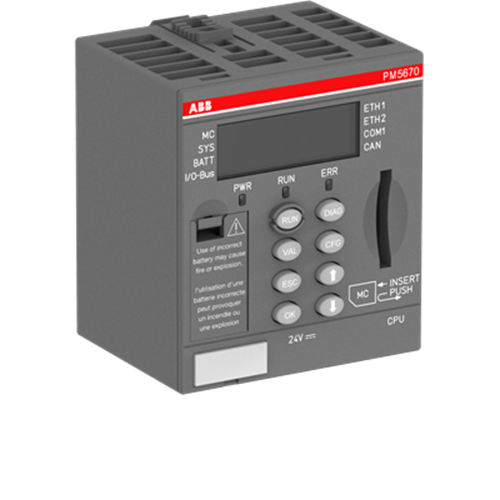
ABB PM5670-2ETH
Price 249999.0 INR / Unit
Minimum Order Quantity : 1 Unit
Surface Color : Other, Grey
Maximum Output Current : 500 mA (per output)
Base Material : Other, Polycarbonate
Cabinet Material : Polycarbonate/Metal Blend
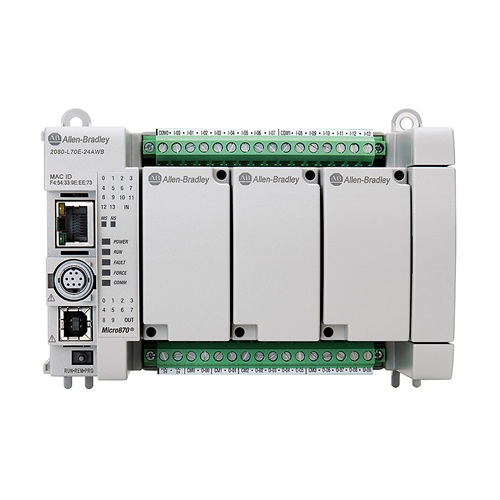
Allen-Bradley 2080-L70E-24AWB
Price 50000.0 INR / Unit
Minimum Order Quantity : 1 Unit
Surface Color : Other, Gray
Maximum Output Current : 2A
Base Material : Other, Plastic
Cabinet Material : Plastic

H K GLOBAL
GST : 24CRRPG0850N1ZG
GST : 24CRRPG0850N1ZG
G 102, Alok Paradise, Bapa Sitaram Chowk, Opp. Metro Mall, Ring Road, Vastral,Ahmedabad - 382418, Gujarat, India
Phone :07971459627
 Send Inquiry
 Send Inquiry
 Send SMS
H K GLOBAL
All Rights Reserved.(Terms of Use)
Developed and Managed by Infocom Network Private Limited.
Developed and Managed by Infocom Network Private Limited.

